This article has been updated to include the 2026 A Level Sociology Grade Boundaries for AQA and OCR.
If you’re studying A Level Sociology, you already know the subject rewards depth of theory and analysis. Understanding grade boundaries is part of that. This post breaks down the A Level Sociology Grade Boundaries for AQA and OCR, tracks how they’ve changed in recent years, and gives detailed analysis about what the trends mean for how you should be revising.
Student Attainment
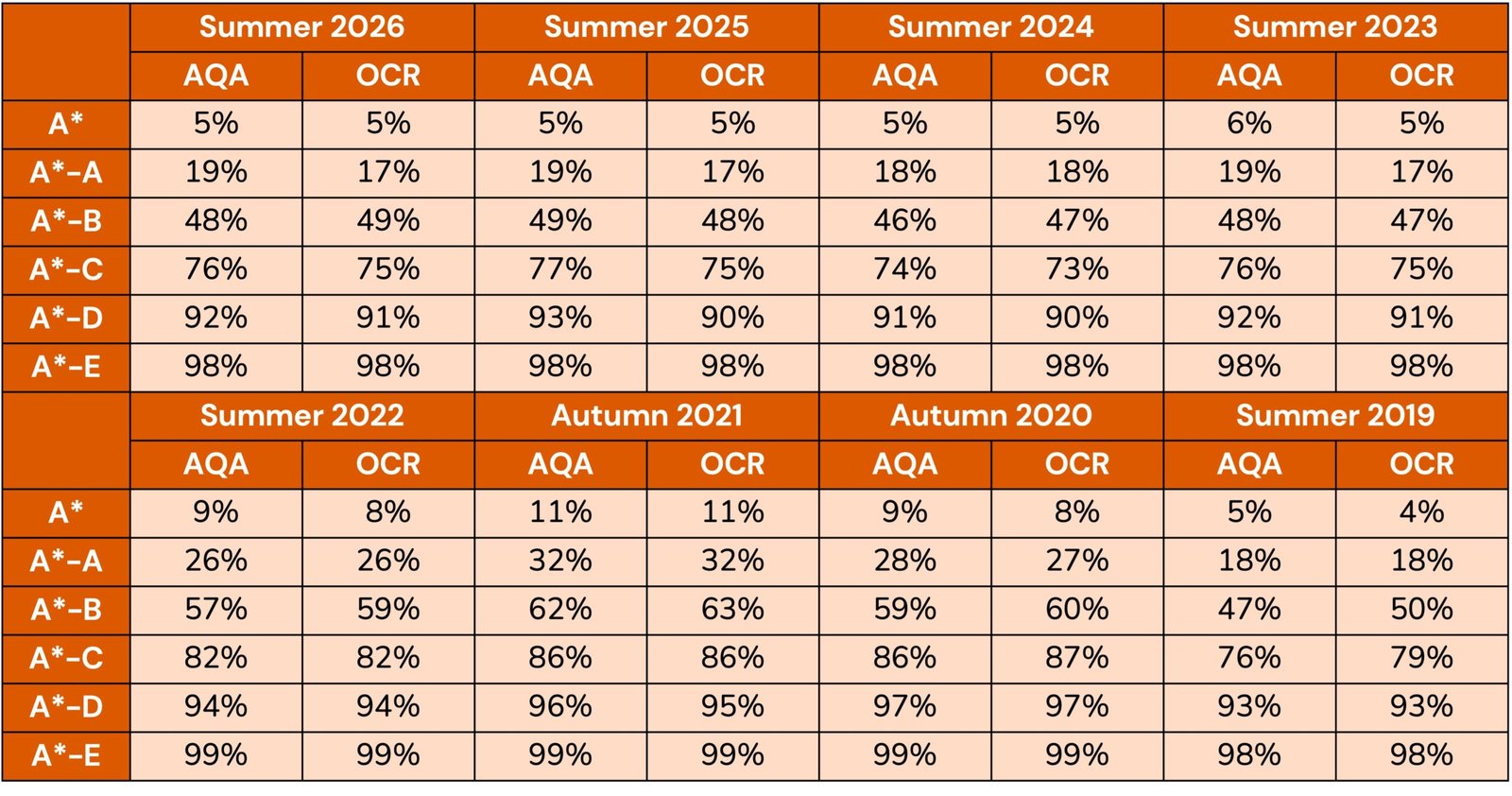
Across both boards since the pandemic, attainment has remained mostly stable. Roughly 5% of students achieve the highest grade A*, and the proportion of students achieving a C or higher remains constant at 74 to 77% for AQA, and 73 to 75% for OCR.
Sociology is a highly competitive subject, with only 5% of students achieve an A*. If you are targeting the highest grades, you’ll need to be consistently scoring in the high 70% range across your papers in practice.
Latest A Level Sociology Grade Boundaries
Click on each image to view it larger
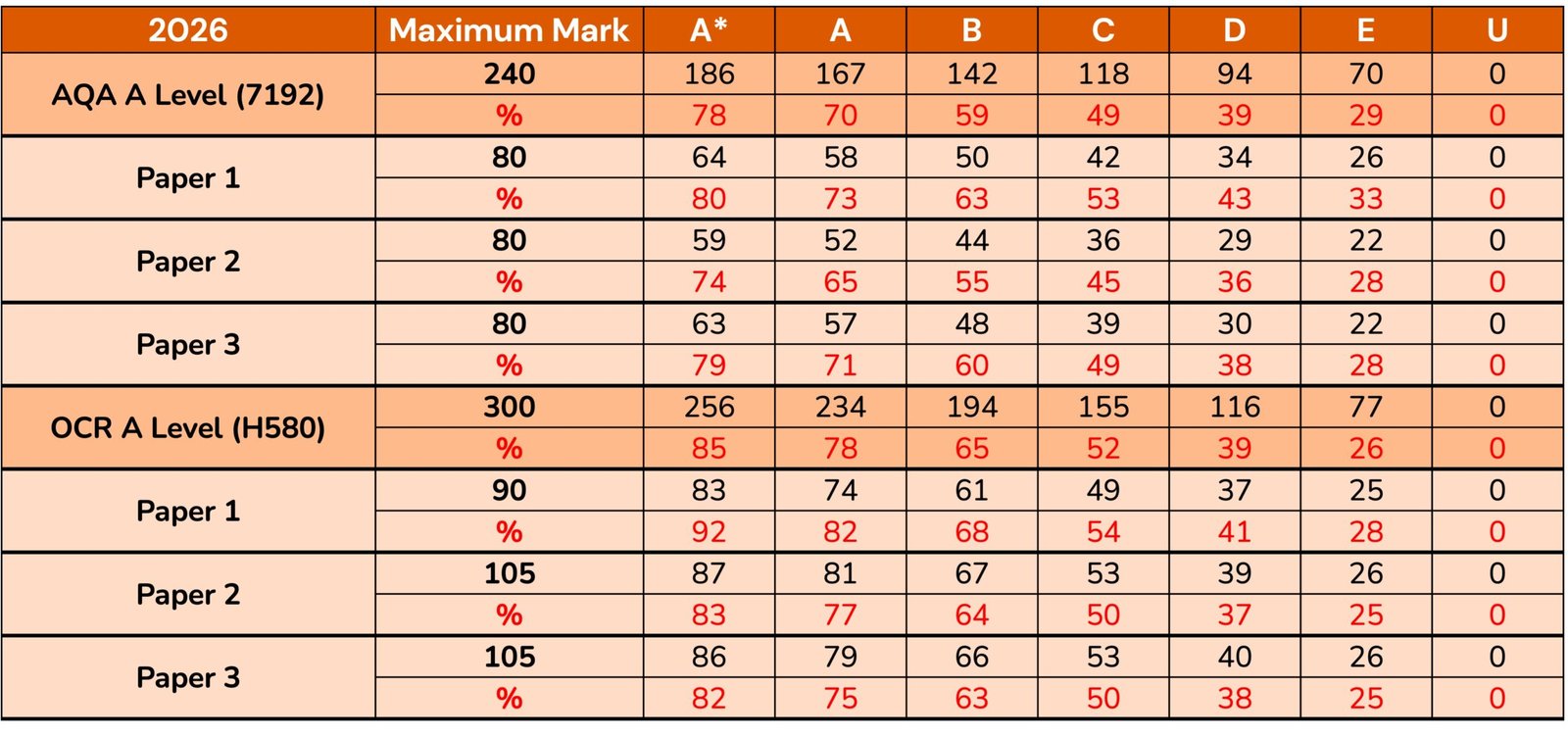
2026 Sociology Boundaries
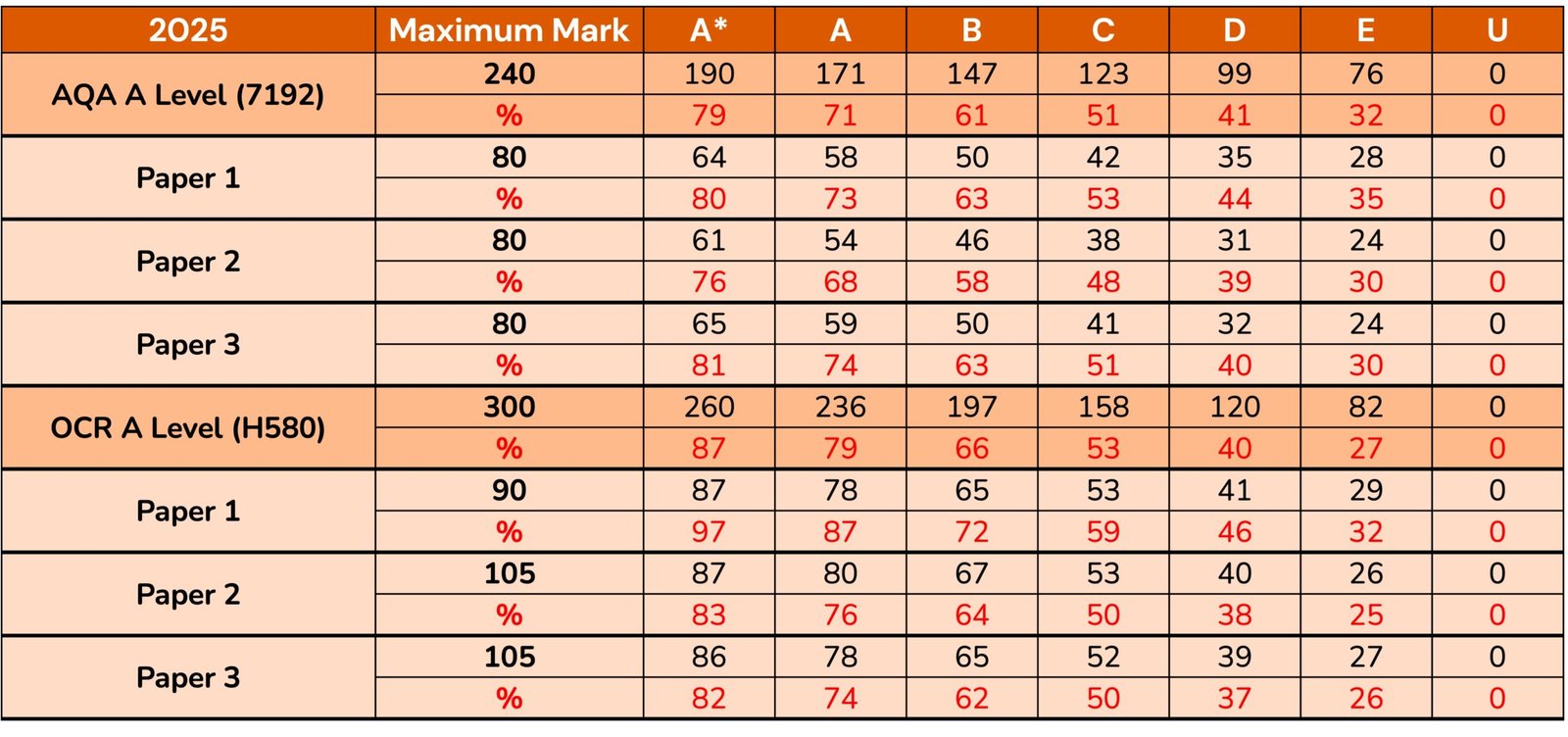
2025 Sociology Boundaries
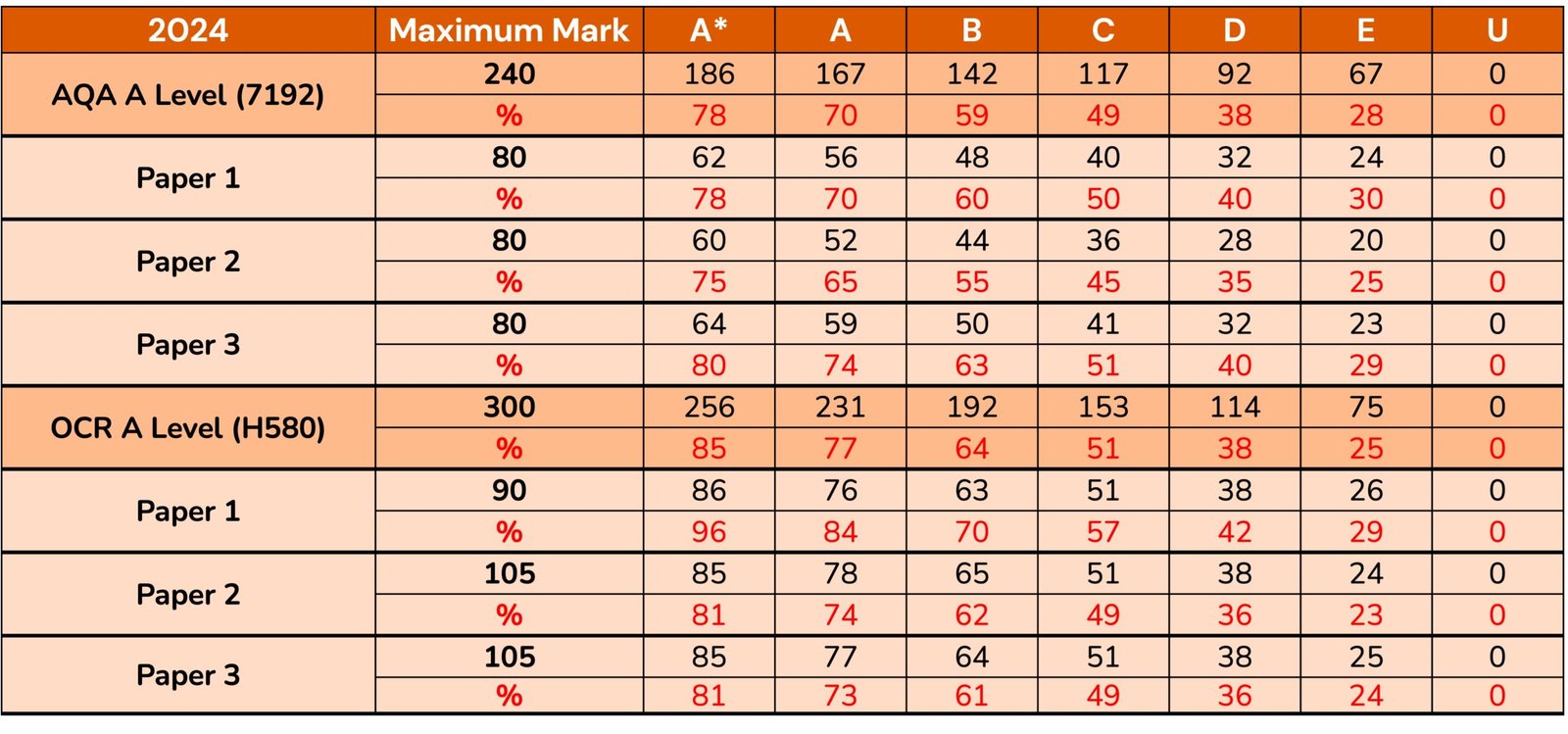
2024 Sociology Boundaries
Which paper to prioritise
Paper 2 (Topics in Sociology) is the most consistent weak spot on AQA. its A* boundary trails Papers 1 and 3 by 3 to 5% in both years. Since Paper 2’s content is school-chosen options rather than fixed topics, this is where you need to be focussing your revision, as each topic carries different results.
Did A Level Sociology get harder or easier?
AQA rose steadily across the board, and the rise was sharpest at the lower grades. The E boundary climbed from 28% to 32% (+4%) and D from 38% to 41% (+3%), while A* only moved +1 point. This means that students are finding the exam content more accessible, so more consistent and exam-focussed revision is required.