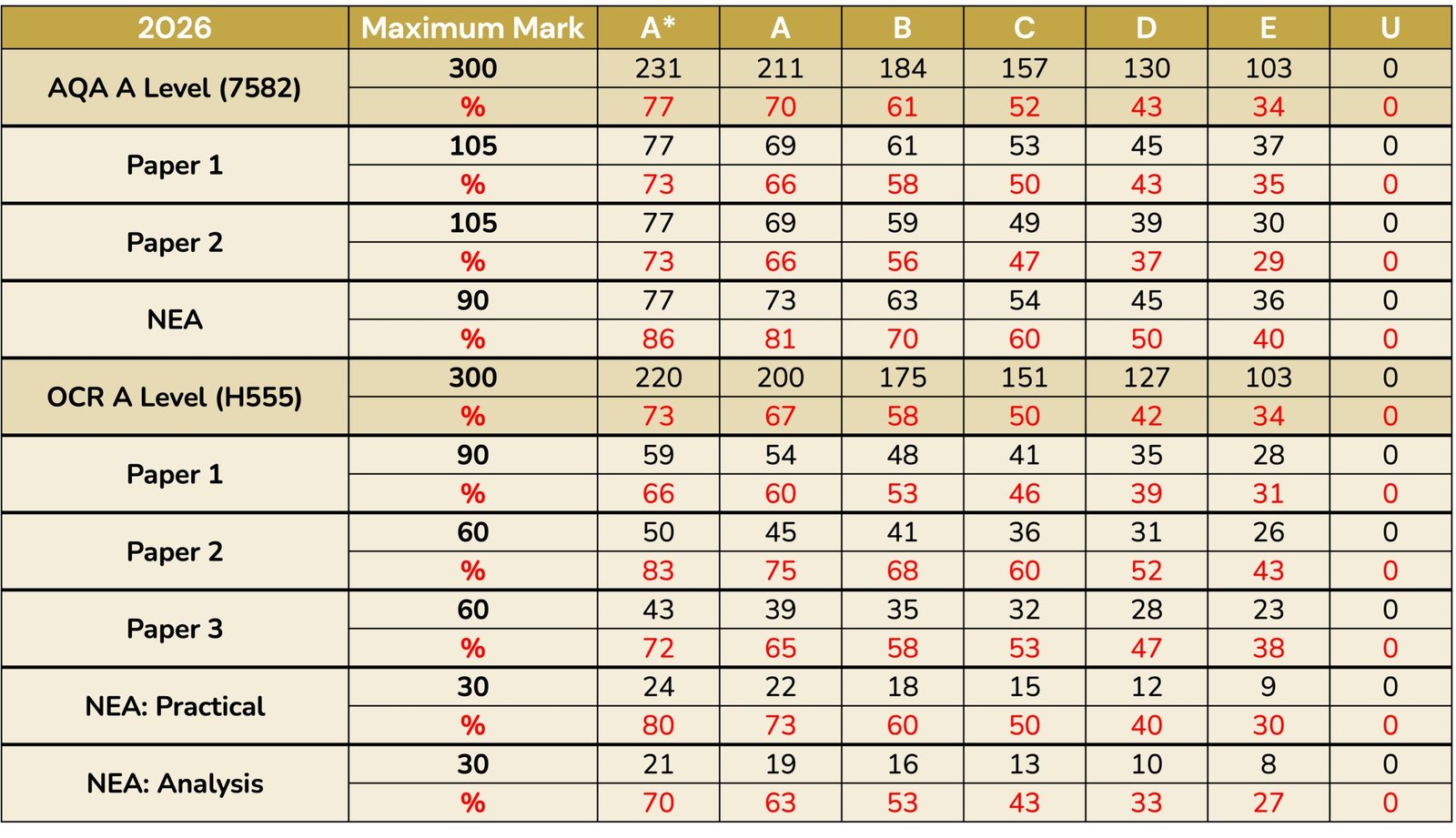
This article has been updated to include the 2026 A Level PE Grade Boundaries for OCR on Thursday 13th August.
If you’re studying A Level PE, results day comes down to three exam papers and your non-exam assessment (NEA) combined. This post breaks down the OCR A Level PE grade boundaries, tracks how they’ve moved across recent years, and gives paper-by-paper analysis of where students tend to pick up (and lose) the most marks.
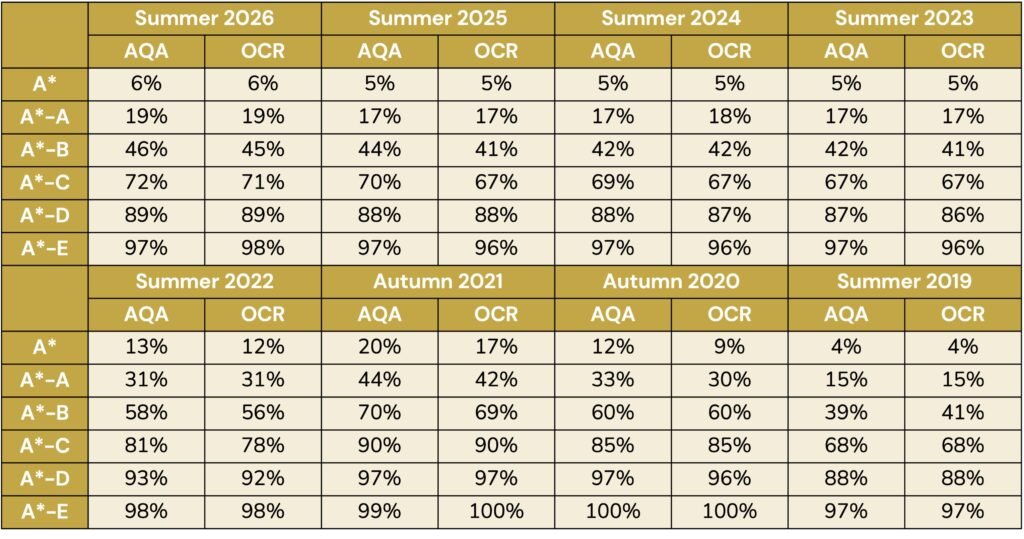
Student Attainment
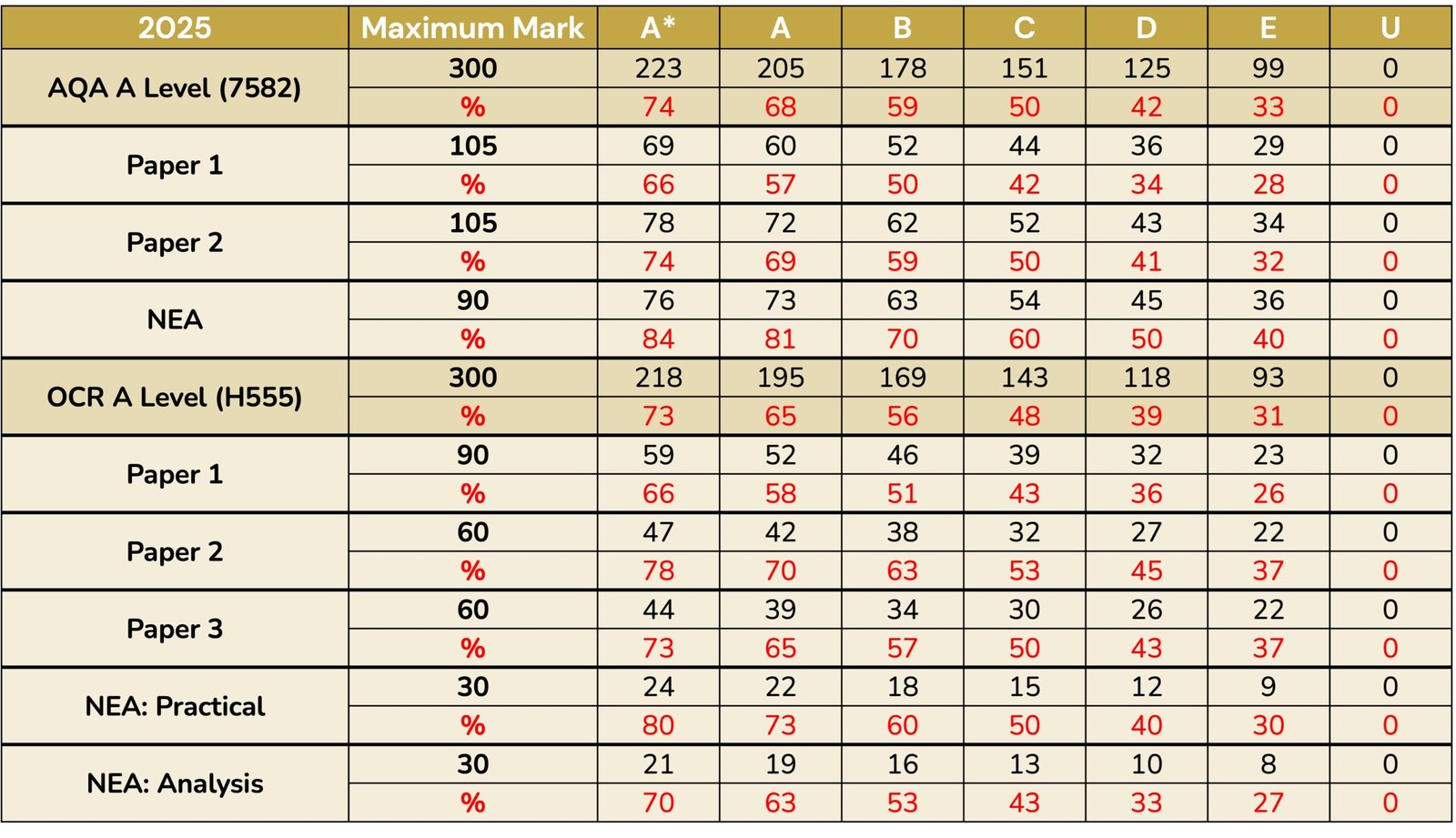
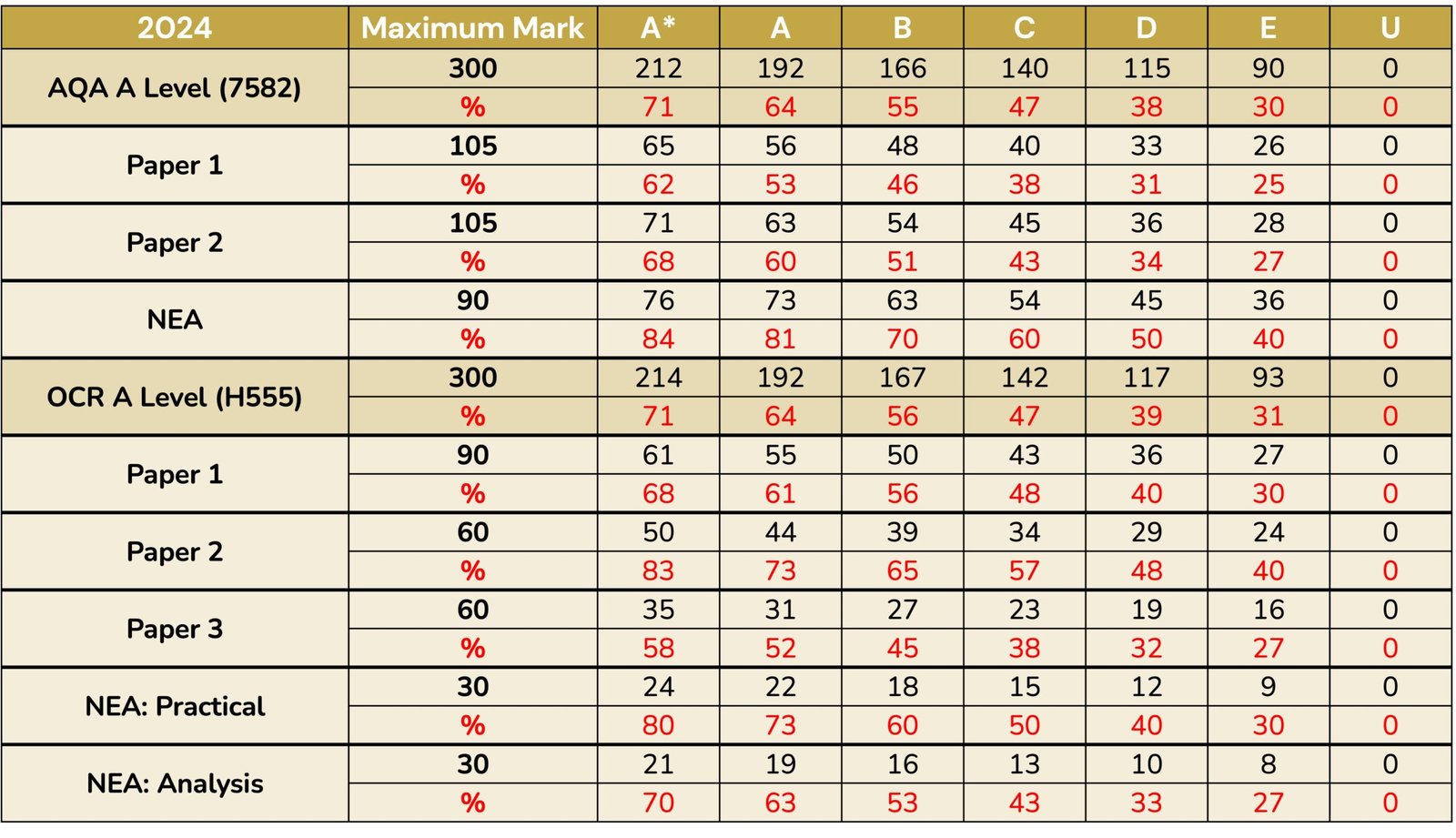
Latest A Level PE Grade Boundaries
Click on each image to view it larger
2026 PE Boundaries
2025 PE Boundaries
2024 PE Boundaries
Which paper to prioritise
On AQA, Paper 2 (Psychological factors) is the toughest of the written papers. Its A* boundary is a few points below Paper 1 in both years, while the NEA is comfortably the highest-scoring component (73 to 84% depending on year). On OCR, the pattern’s more pronounced: Paper 1 (Physiological factors) sits far higher (61 to 68%) than Papers 2 and 3, meaning Papers 2 and 3 (Psychological factors, and Socio-cultural issues) are where OCR students consistently drop the most marks. Either board: don’t neglect the NEA thinking it’s “easier marks anyway”. It’s genuinely where most students perform best, so a weak NEA drags the overall grade down disproportionately.
Did it get harder or easier?
AQA and OCR PE have both been broadly stable. Since the coursework grade boundaries have remained stable across the years, it’s clear that this is an area to focus on for students sitting exams in 2027.